Progression

Along the way i learned a lot of new things about unreal engine and blender, here i will log some of the things i did over the last 2 months.

Sculpting tool

i learned how to make a landscape in unreal engine using the sculpt tool, it allows you to start with a flat terrain and then using the different tools provided it allows the user to mold the terrain, giving it hills and bumps, completely having control of the height of everything on your landscape, it also provides things like the corrosion tool that allows the user to add realistic bumps in the terrain, to make it look like it withered away over time.

Material

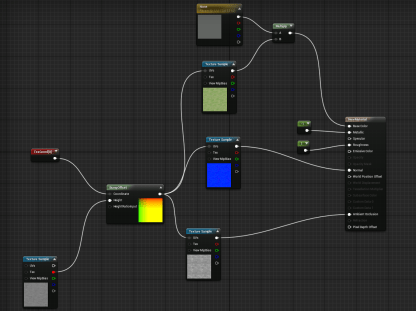
The creation process of a material involves a lot of node management, in unreal engine you can create anything as long as you have the knowledge required because of how in depth the material nodes go, you can completely customize the size of everything, change the color of a material and change how much something tiles, i learned how to create a material that you can paint directly onto the landscape, changing the brush size and the opacity to mix with other materials, it is basically like a 3D version of Photoshop

Grass

when i created the grass i used some images and also a few tools that i learned how to use that i didn’t even know unreal had because they are under the miscalculation section. in unreal engine you can use a grass foliage tool to make a grass texture appear above a material when that material is placed as long as the material has the word grass in the material name.

Crack It

Blender has an add-on that allows you to crack anything that you create, therefore if you make a wall you can add a rock effect to it with cracks to make it look like cracked stone, the when you add a texture to it it will look like a normal rocky wall.

Extrusion

Blender has a tool that allows the user to extrude something that they are making, this is really useful when used with the subdivide tool as it lets you select a smaller part once its subdivided.

Materialize

the materialize application allows you to create a material out of whatever you want, it provides you with the normal, height map, AO and other options that are not as necessary, you can then insert this into a material on unreal engine, connect some nodes and then when you put it onto something it will have more texture and height to it

The landscape tool allows you to add and remove parts of your landscape, this was convenient as it allowed me to constantly add and remove parts of the landscape along the way.

Things I Learned Along The Way.

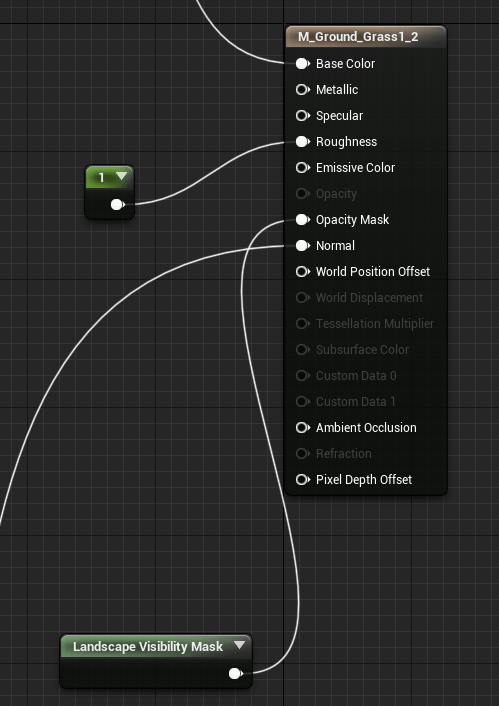
I was able to figure out a way to remove a chunk of a mountain using unreal engines landscape tools, they way you do it is you decrease the visibility of a material causing it to vanish when clicked. If you just try to use the tool it will come up with an error. To make it work you have to add a node to the material this node is called the “LandscapeVisibilityMask” it gives the user the ability to tamper with existing assets.
Capture.PNG

Creating Material

Using unreal engine you can explore nodes and textures to make advanced material. this is beneficial because it makes a texture more realistic. There are multiple websites and add-ons that allow the user to develop these materials, the websites grab your source image and they transform it into a Specular Map, Ambient Occlusion, Displacement Map and a base image. ThCapture.PNGen using the node system in unreal engine you can make them look more real and layered to make it look like its actually there on the ground.
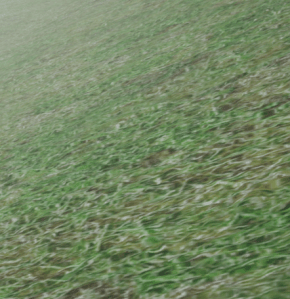


This is an example of a basic material, this took a few second to create.

It is a simple plan with only 3 nodes and a little bit of

Basic Material.PNG

lighting, this material is boring and looks like it was painted on to the floor. The reason for this is because it doesn’t have much layering which makes it looks mushed together.


This is a more advanced material, it has a lot of nodes involved. while creating it i took advantage of the materialize add on, this add on allows the user to create more advanced materials from a basic one, i also added extra coloring to make the darker green stand out and i removedRealistic Material all instances of gloss because grass not supposed to be shiny.
Screenshots


While trying to find a way to make the walls for my turf house i came across a blender add on called “Crack It!” this add on allows the user to crumble any object giving it a rocky texture and breaking it into small chunks of rock. it allows you to decide how many cracks you want and how spread apart they are using the subdivisional tools. the tool also lets you chose what kind of texture you want it does not have to be a rock, you can also make it different variants of mud and trees.Capture.PNG

Experimentation

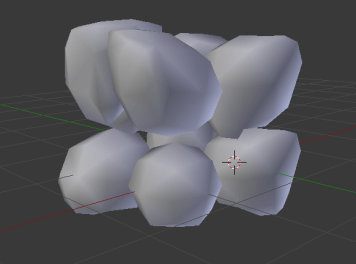
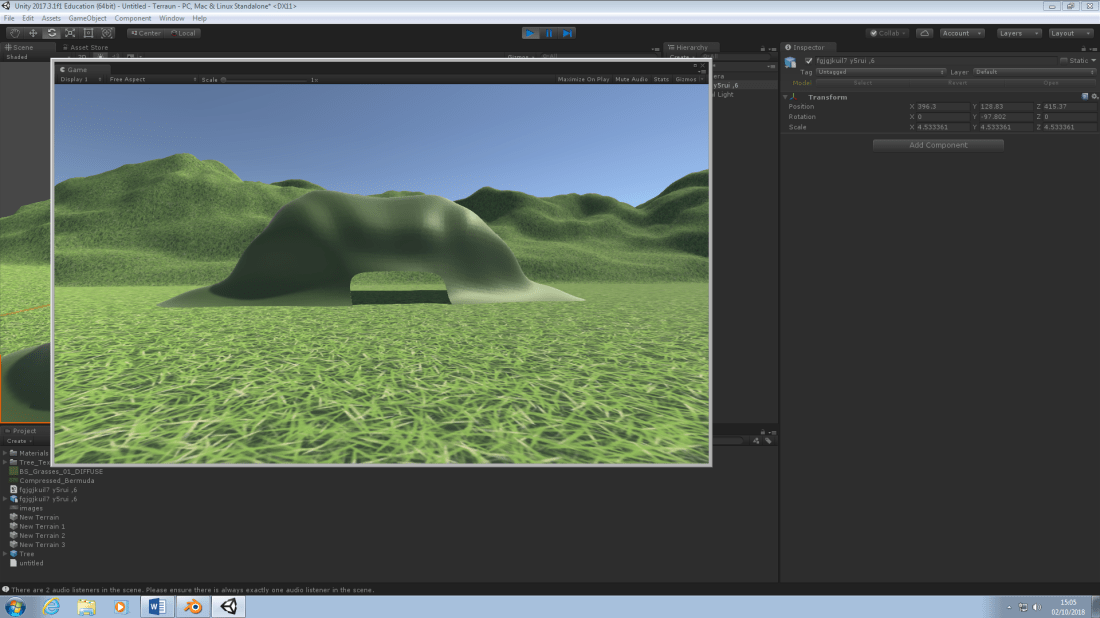
Because Vikings lived in turf houses I watched a few tutorials and decided to practice my skills in blender by creating something that resembles a turf house, I did this by using the sculpting tool to my advantage, I made a cube and sculpted it into the shape of a house entrance.

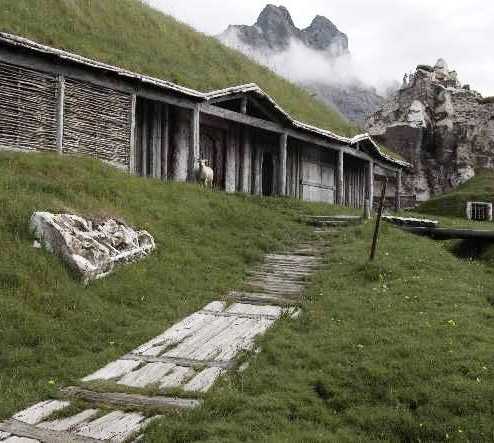
When making it I was inspired by this image and how the houses look as if they were a part of the mountain at first glance. The only problem I came across it that the shape was too small therefore if I was to go more in depth I would have to enlarge it or I wouldn’t be able to put things inside the building as there’s barely enough space inside of the building.

Viking History

The days of the week were named after Viking gods.

Vikings were the best at making boats, they helped them a lot during various military and inversional missions, the reason their boats were that good is because they used most of their wood on boats instead of houses and their boats were designed to be able to departure from land fast witch gave them an advantage when retreating and setting out to sea. Vikings were focused on gaining physical strength, therefore when a child was ill or sick they would abandon it, they would abandon them by throwing them into the sea or by leaving it in the wilderness. Vikings had a unique funeral ceremony, when one of them died they would give them a unique funeral service, what they would do is lay the deceased on a boat clothes, all their pets and jewellery. Set it on fire then push it into the sea. In the Norsemen society they preferred blondes, it was so desired brunette men came up with tactics to lighten the colour of their manes, and one of their primary methods was using a strong soap to bleach their hair. Surprisingly Vikings had good hygiene, they even had their own grooming tools, which where the most common tools crafter even more common than weapons. In the Viking period the most popular crossing was between Iceland and Norway, this would take those 3 to 5 days depending on the route and communication between the crew.

For my final idea I have decided to make a Viking village located in Iceland. This village is not a traditional village but a replica of one. It was built for a film set based around Viking life. The village is 5 km East from Höfn. So it’s a little bit of a walk to get there, but the journey introduces you to the habitats that the Vikings lived in back then.  Vikings built their villages beneath a mountain, often in its shadow. Vikings discovered Iceland in the ninth century and when they did it was still inhabited this means that the village is supposed to represent one that was built shortly after they visited Iceland. The buildings in the village mimic the architecture of the period perfectly and the interior of the buildings looks indistinguishable from real Viking architecture. This is a good source to study as it shows what life was like back then but on the other hand it’s a replica so it is not completely perfect and wasn’t built by the Vikings so it was built with a different mind-set and moral. When Vikings visited Iceland they had to have women on the ship too just so they can start developing and establishing a civilisation. The animal’s native to Iceland are sheep, cattle, chicken, goat, and the Icelandic sheepdog this was good for the Vikings as they could domesticate them and keep them as pets and a source of food. Polar bears travel on ice burgs from Greenland to Iceland, they are a good source of protamine and clothing.

Viking boathouses were built against the waterline and were dug into the ground, they were made to hold the ships of the Vikings. When building the boathouse they made sure they were big and up to 82feet long. This is because the boats that they built were really big. The base of the building was piled up with stone and then the walls were made from wood. Vikings had ring fortresses, they had a circular shape and were called Trelleborgs. They were built in Denmark and were made in memory of Harold Bluetooth who died in 986. Vikings had religious buildings for praying, they had them even before Christianity arrived in Scandinavia. Once this occurred the ritual houses started to resemble churches.

Christian Vikings gathered in Stave churches, from the outside they did not look like a church, they had the rooves of a traditional ritual house and were multiple layered but often had spirals or a tower in the middle. The walls of these churches were made out of stone and in the inside there were a lot of crosses and depictions of Jesus.


The rooves pf a Viking house were covered in dirt and grass was planted on them. Islandic houses were a large foundation made of stone with widen frames, the main doorway led to the centre room witch had a lit fireplace in the centre of the room that provided lighting and heating to the house. The floors in the rooms were covered by earth wood and stone.

Viking clothes were made out of animal skin, wool and linen. Men wore tunics and trousers but women wore dresses, their clothing was made by women and children.


Icelandic Vikings

For my final idea I have decided to make a Viking village located in Iceland. This village is not a traditional village but a replica of one. It was built for a film set based around Viking life. The village is 5 km East from Höfn. So it’s a little bit of a walk to get there, but the journey introduces you to the habitats that the Vikings lived in back then.  Vikings built their villages beneath a mountain, often in its shadow. Vikings discovered Iceland in the ninth century and when they did it was still inhabited this means that the village is supposed to represent one that was built shortly after they visited Iceland. The buildings in the village mimic the architecture of the period perfectly and the interior of the buildings looks indistinguishable from real Viking architecture. This is a good source to study as it shows what life was like back then but on the other hand it’s a replica so it is not completely perfect and wasn’t built by the Vikings so it was built with a different mind-set and moral. When Vikings visited Iceland they had to have women on the ship too just so they can start developing and establishing a civilization.

Related image

Focused Research- Vikings

Sheep were the main reason the Vikings survived such harsh weathers, they provided them meat and wool, therefore the early settlers of Iceland decided to bring them along when going to Iceland for the first time. Iceland has a unique type of horses, the horses of Iceland are a lot more “intelligent, sociable and curious” because when Vikings came from Norway they could only fit one horse on the longboat so they took their best horses to with them. The Viking horses are also a lot shorter in size then those from the rest of the world as they rarely reached past 150cm. the horses are not allowed to come back to the island if they leave because the native breed are sensitive to diseases and a foreign infection could wipe the whole population.

Before the Vikings visited ice land the arctic fox was the only mammal in Iceland, they survived because of their thick fur and from eating eggs, birds and some of the berries. They were some trouble for the Viking settlers as they would attack the livestock but they were also beneficial because they killed mice and other small rodents.

Vikings were the best at making boats, they helped them a lot during various military and inversional missions, the reason their boats were that good is because they used most of their wood on boats instead of houses and their boats were designed to be able to departure from land fast witch gave them an advantage when retreating and setting out to sea. Vikings were focused on gaining physical strength, therefore when a child was ill or sick they would abandon it, they would abandon them by throwing them into the sea or by leaving it in the wilderness. Vikings had a unique funeral ceremony, when one of them died they would give them a unique funeral service, what they would do is lay the deceased on a boat clothes, all their pets and jewellery. Set it on fire then push it into the sea. In the Norsemen society they preferred blondes, it was so desired brunette men came up with tactics to lighten the colour of their manes, and one of their primary methods was using a strong soap to bleach their hair. Surprisingly Vikings had good hygiene, they even had their own grooming tools, which where the most common tools crafter even more common than weapons. In the Viking period the most popular crossing was between Iceland and Norway, this would take those 3 to 5 days depending on the route and communication between the crew.

Turf houses protected Vikings against rain winds and earthquakes, this is very useful because of the bipolar climate of Iceland, and normal houses without stable and well thought out architecture would get knocked down due to the harsh weather. The turf houses were often infested with mice and sometimes even lice.

For my final idea I have decided to make a Viking village located in Iceland. This village is not a traditional village but a replica of one. It was built for a film set based around Viking life. The village is 5 km East from Höfn. So it’s a little bit of a walk to get there, but the journey introduces you to the habitats that the Vikings lived in back then.  Vikings built their villages beneath a mountain, often in its shadow. Vikings discovered Iceland in the ninth century and when they did it was still inhabited this means that the village is supposed to represent one that was built shortly after they visited Iceland. The buildings in the village mimic the architecture of the period perfectly and the interior of the buildings looks indistinguishable from real Viking architecture. This is a good source to study as it shows what life was like back then but on the other hand it’s a replica so it is not completely perfect and wasn’t built by the Vikings so it was built with a different mind-set and moral. When Vikings visited Iceland they had to have women on the ship too just so they can start developing and establishing a civilisation. The animal’s native to Iceland are sheep, cattle, chicken, goat, and the Icelandic sheepdog this was good for the Vikings as they could domesticate them and keep them as pets and a source of food. Polar bears travel on ice burgs from Greenland to Iceland, they are a good source of protamine and clothing.

Viking boathouses were built against the waterline and were dug into the ground, they were made to hold the ships of the Vikings. When building the boathouse they made sure they were big and up to 82feet long. This is because the boats that they built were really big. The base of the building was piled up with stone and then the walls were made from wood. Vikings had ring fortresses, they had a circular shape and were called Trelleborgs. They were built in Denmark and were made in memory of Harold Bluetooth who died in 986. Vikings had religious buildings for praying, they had them even before Christianity arrived in Scandinavia. Once this occurred the ritual houses started to resemble churches.

Vikings kept sheep near their settlement for wool and to eat, some kept goats but they were considered a poor man’s livestock because goats didn’t grow wool they grew hair which was not as valuable to the Vikings and they couldn’t sell it for as much. The Vikings also kept pigs as pets, they were an old variation of the Eurasian Wild Boar therefore they had fur which added to their value.

Vikings found a lot of value in cats, they thought they were very loyal companions and considered them useful for catching mice and other rodents that got into the house, Viking brides sometimes received kittens as a present because everyone was aware of their usefulness. Dogs were also used widely by Vikings, they helped them with everyday tasks and hunting, Vikings had a lot of respect for dogs and therefore when Vikings died their pets would get buried with them as a sign of respect.

While researching Viking mythology I found out that the video game Skyrim has a lot of links to Norse mythology. In according to skyrims lore when a nord dies they get taken to the hall of valour, this a direct link to Valhalla, which has the exact same lore behind it as skyrims hall of valour. The poetic adda is a book in skyrim that contains the entire history of skyrim.

Christian Vikings gathered in Stave churches, from the outside they did not look like a church, they had the rooves of a traditional ritual house and were multiple layered but often had spirals or a tower in the middle. The walls of these churches were made out of stone and in the inside there were a lot of crosses and depictions of Jesus.


The rooves pf a Viking house were covered in dirt and grass was planted on them. Islandic houses were a large foundation made of stone with widen frames, the main doorway led to the center room witch had a lit fireplace in the center of the room that provided lighting and heating to the house. The floors in the rooms were covered by earth wood and stone.

There was actually a surprising amount of trees in Iceland when the Viking settlers came, this is because Iceland was warmer back then and there were a lot less glaciers. Because of the heat trees had a perfect climate to grow in, the main kind of trees used were birch trees as there were a lot of them and a limited amount of rowan trees.

The Vikings are actually the one to blame for the deforestation of Iceland, they used all the trees in Iceland to build houses, ships and for charcoal.


This image shows what is left from a Viking house in Glaumbær, the house was renovated and upgraded to today’s standards but it still shows what houses looked like, I like way there is grass growing on the roof I think it is a really creative way around. The reason Vikings had grass rooves is because it’s cheap and it is easy to do.

Iron Shod Spade

This tool was used by the Vikings to dug holes it had fin metal to make it easier for them to dig the wholes and make it slide into the ground at a better angle.

Wooden Pitchfork

This tool was used by the Vikings for haymaking and spreading manure. They had to be gentle with the tool though because it was out of wood and could snap easie

Stone Quern  These where used to mill flower, but they also used the water current to do that and it wasn’t always manual. It really depends on how wealthy you where and   how much wood you had

Vikings wore clothes made out of wool, linen and animals, they made their clothes themselves. The clothes where usually made by women with the help of children, they used plants to buy the clothing naturally and gave it color.